

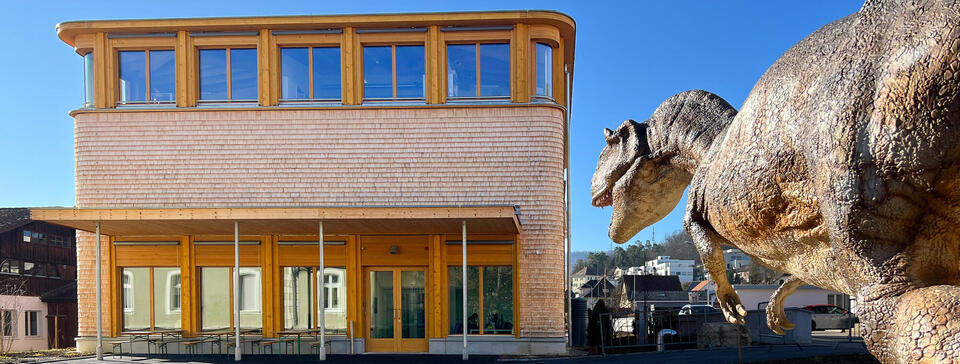
Located in Porrentruy, between the JURASSICA Museum and Botanical Garden, the Research and Conservation Centre (RCC) is a scientific and operational hub that brings together under one roof two entities with complementary missions: JURASSICA, dedicated to the natural sciences, particularly palaeontology, geosciences and botany, and the Cantonal Archaeology Department, responsible for studying and preserving the Jura’s archaeological heritage. This shared infrastructure provides the conditions required for the research, conservation and promotion of the palaeontological, archaeological and natural science collections of the Canton of Jura.
A scientific hub serving Jura’s heritage
The RCC and the cellars of Porrentruy Castle house nearly one million objects, selected for their scientific importance and originating from the collections of JURASSICA and the Cantonal Archaeology Department. This heritage spans around 152 million years of the Jura’s history and life, from Jurassic fossils and dinosaur tracks to archaeological remains and natural science collections. The collections notably originate from major excavation campaigns carried out since 1990 along the route of the A16 motorway, as well as from historical collections inherited from naturalists active between the late 18th and the first half of the 20th century, including Jules Thurmann, Frédéric-Edouard Koby, Albert Perronne and André Rais.
Owned by the Republic and Canton of Jura, the RCC houses the management, administration, research, collection management and public engagement units of JURASSICA. It also accommodates the management, administration and research activities of the Cantonal Archaeology Department. This close proximity encourages the exchange of expertise and collaboration between the natural sciences, palaeontology, geosciences and archaeology, while preserving the specific missions of each of the two entities.
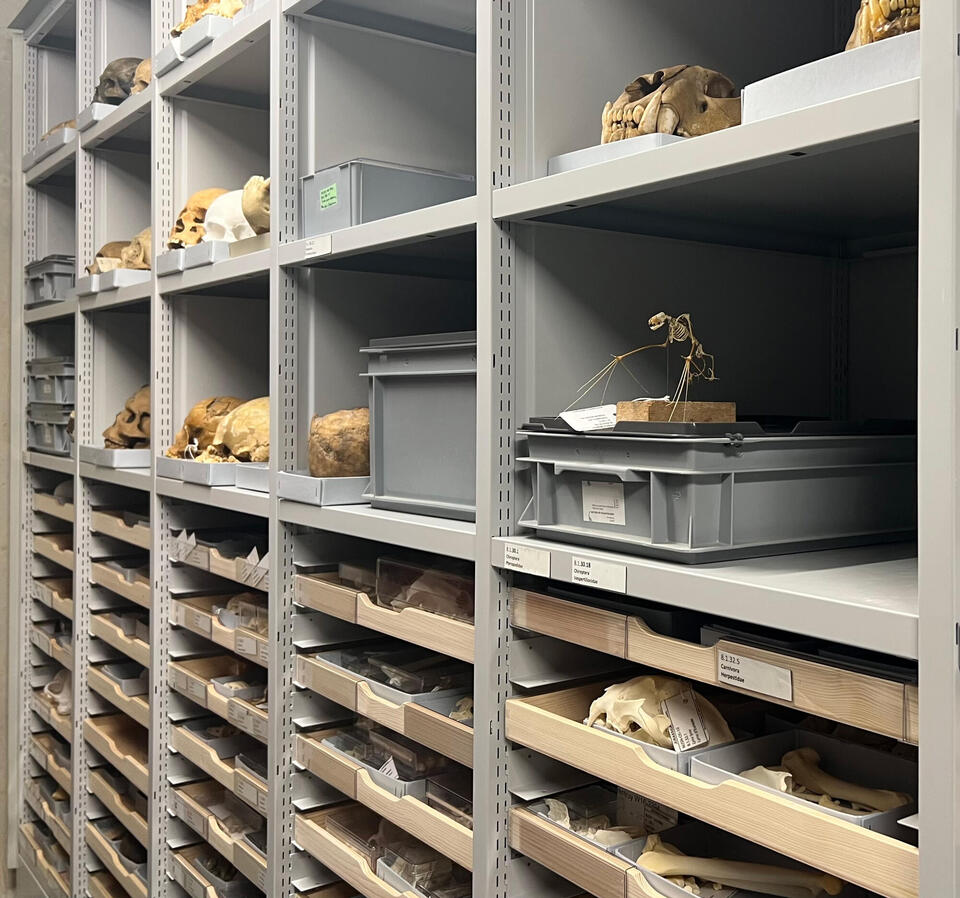 Collections
Spaces dedicated to conservation, research, and the public
At the heart of the building, the collections stored underground benefit from strictly controlled conditions. Bones, fossils, archaeological objects, herbaria and preserved natural history specimens are kept in climate-controlled storage areas equipped with mobile shelving systems.
The RCC also houses a preparation and restoration laboratory, equipped with state-of-the-art technology. Here, objects are prepared, studied, documented and stabilised before being incorporated into the collections or presented to the public. The laboratory plays a central role in the scientific process, closely linked to field excavations, research, digitisation and university teaching activities.
Designed as a meeting place between science and the public, the workshop room at the Research and Conservation Centre hosts educational activities, performances, university courses and conferences.
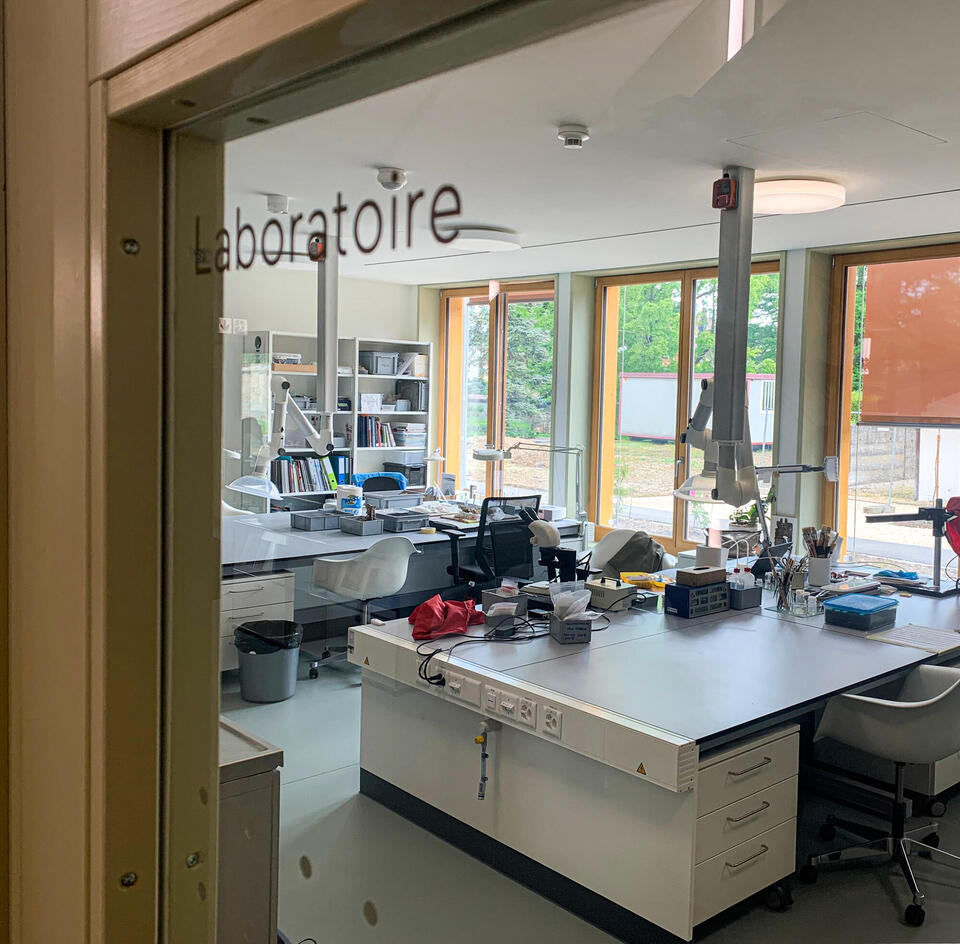 Laboratory
An exemplary and sustainable building
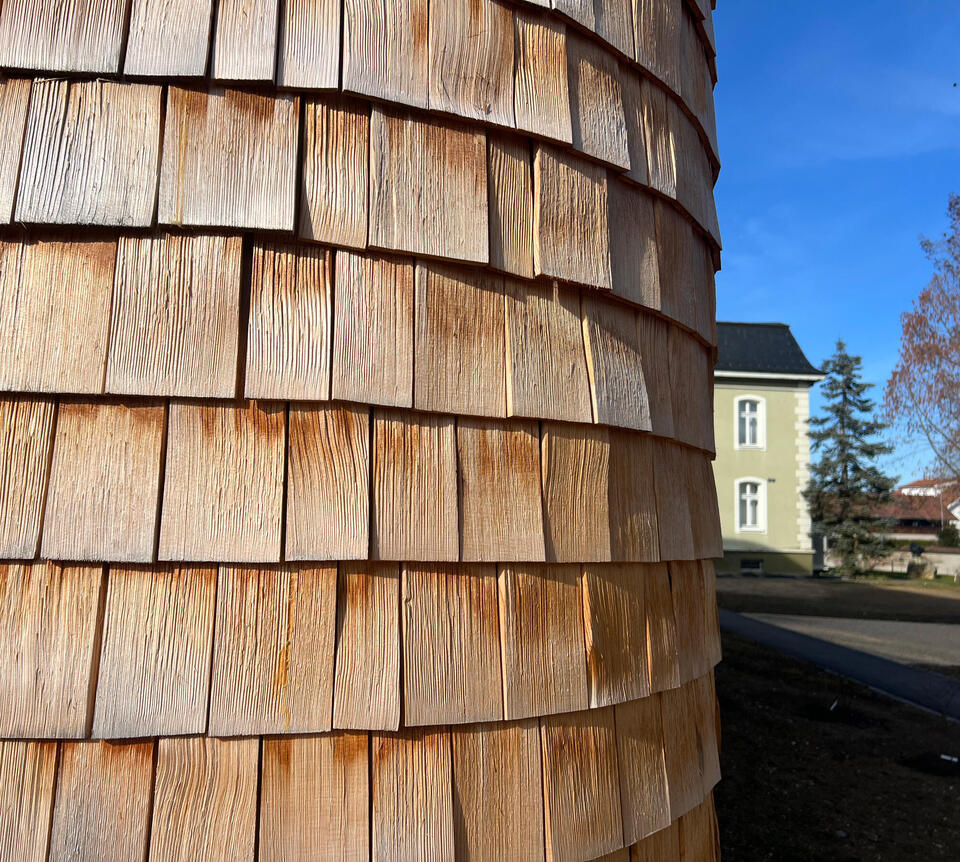
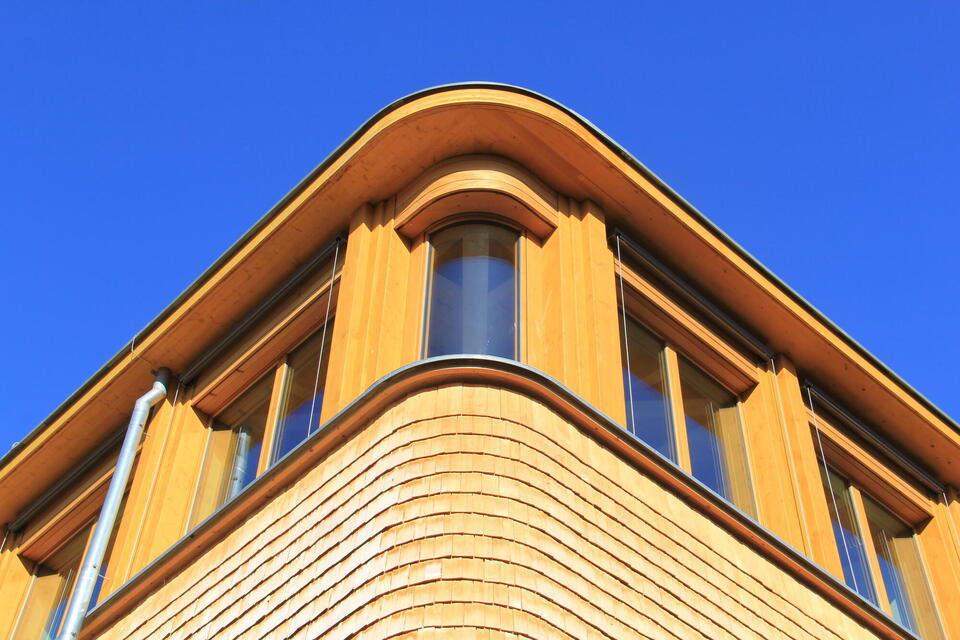
The result of an architectural competition won in 2019 by the “ORIGINES” project by Figueiredo Pena Amos Architectes (Meyrin), the building is fully aligned with the Canton of Jura’s sustainable development policy. Predominantly constructed from wood, both for its load-bearing structures and façades, it is Minergie-P certified and equipped with photovoltaic roof tiles to generate solar energy.
Its contemporary architecture enters into dialogue with Villa Beucler, which houses the museum. Discreet and harmoniously integrated into its surroundings, the building comprises three above-ground floors and a large basement, with a layout designed to meet the needs of conservation, scientific work – including a brand-new preparation laboratory – and welcoming the public.
 RCC
RCC
Open to its surroundings , central to its mission
The areas surrounding the RCC were designed as a natural extension of the Botanical Garden and in harmony with the museum complex as a whole. Outdoor features such as a tortoise park and a life-size Allosaurus sculpture offer visitors an initial immersion into the world of palaeontology and the natural sciences.
Much more than an administrative building, the Research and Conservation Centre is a shared infrastructure serving JURASSICA and the Cantonal Archaeology Department. It makes it possible to centralise scientific and administrative activities, share specialised infrastructure and foster collaboration with academic and scientific institutions.
Through the complementary nature of the institutions it houses, the RCC contributes to the study, conservation and transmission of the Jura’s natural and archaeological heritage, while also enhancing its scientific profile and public outreach.
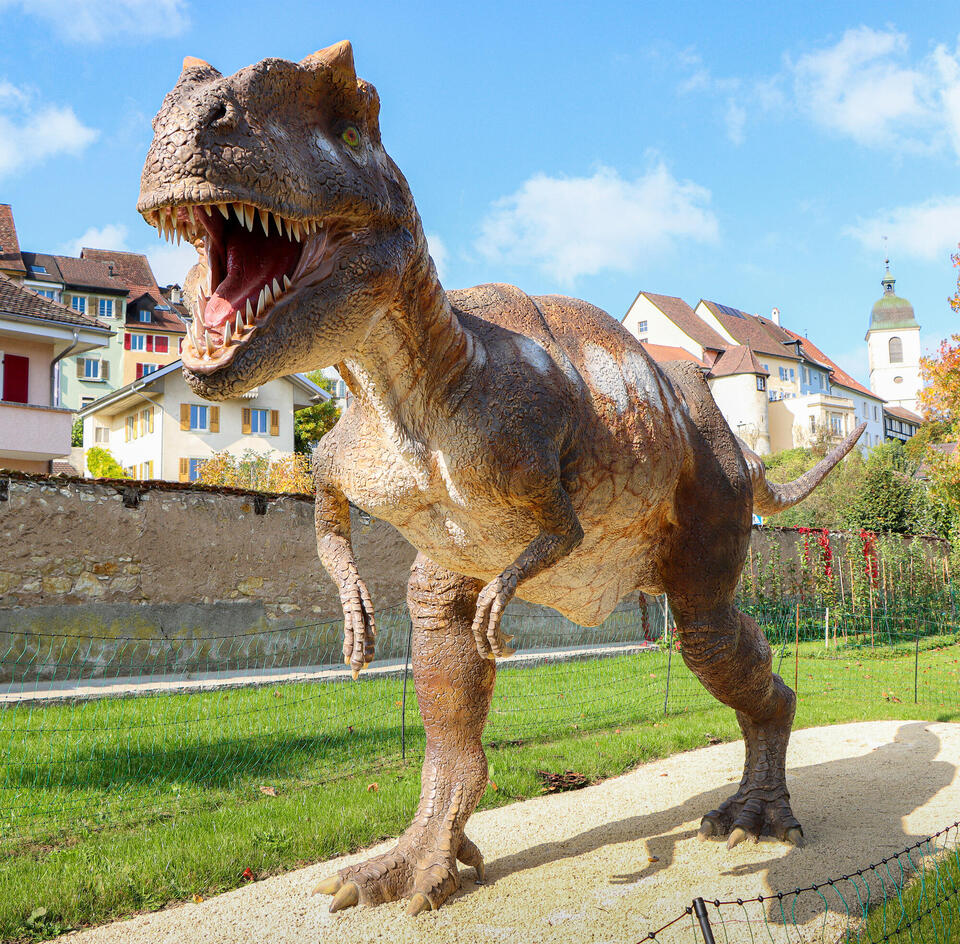 Allosaurus
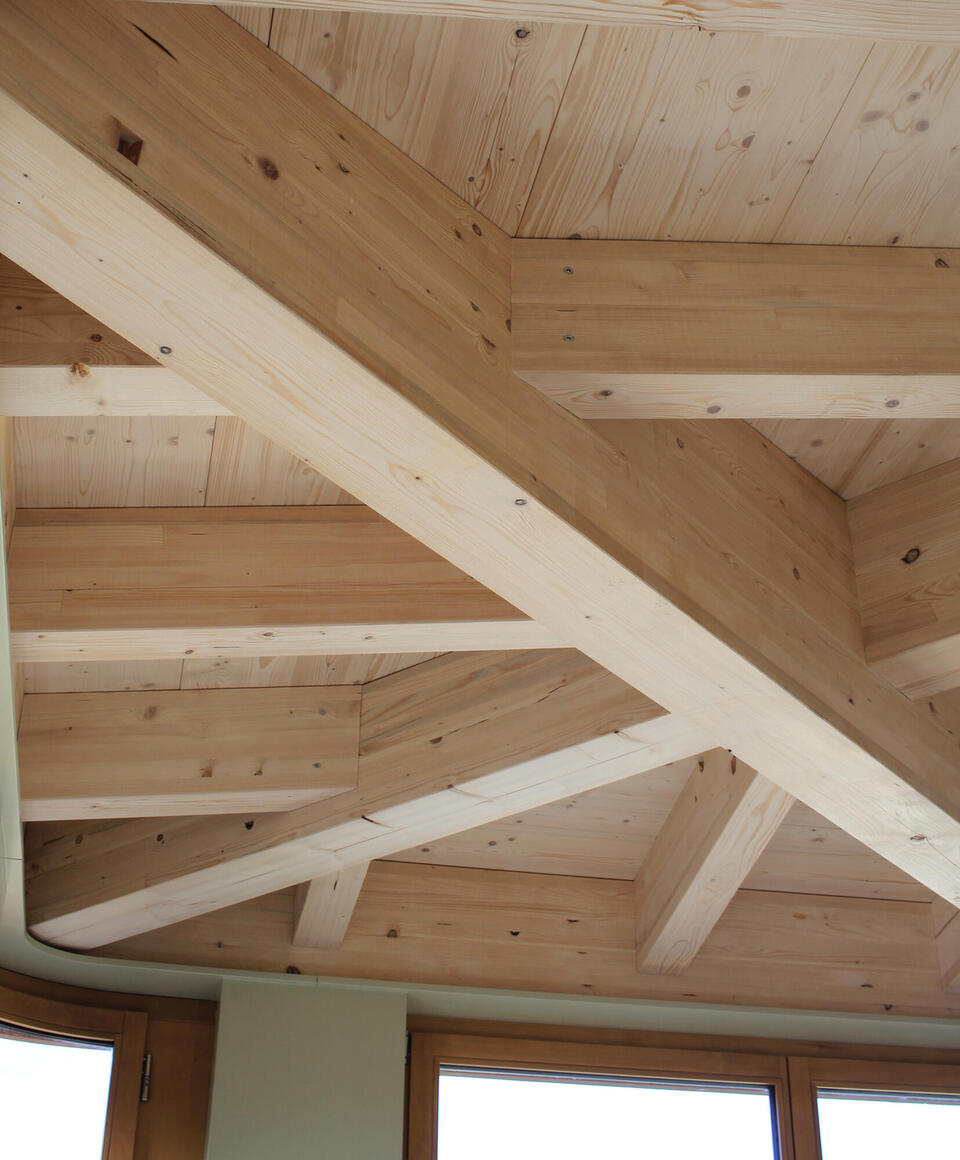 Timber framework
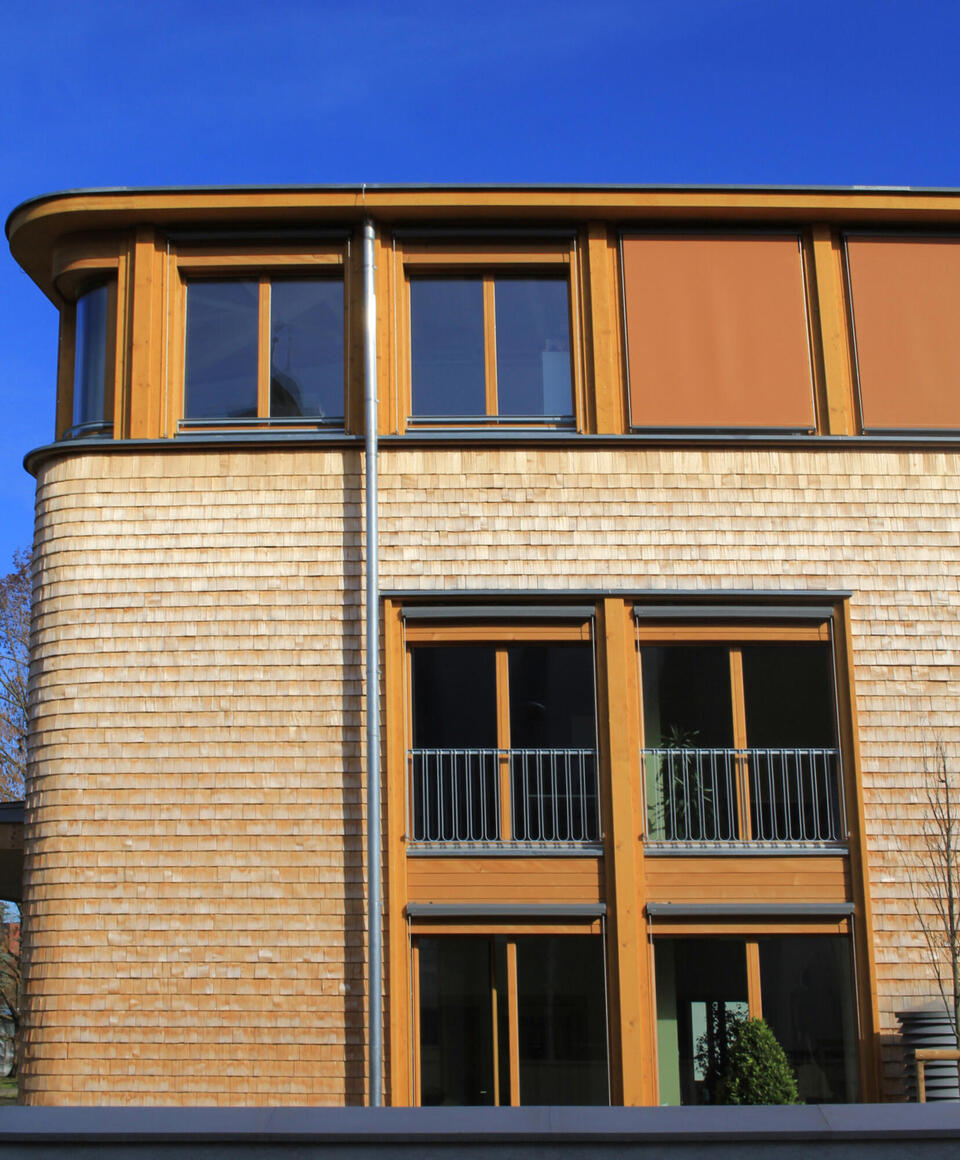 RCC
RCC
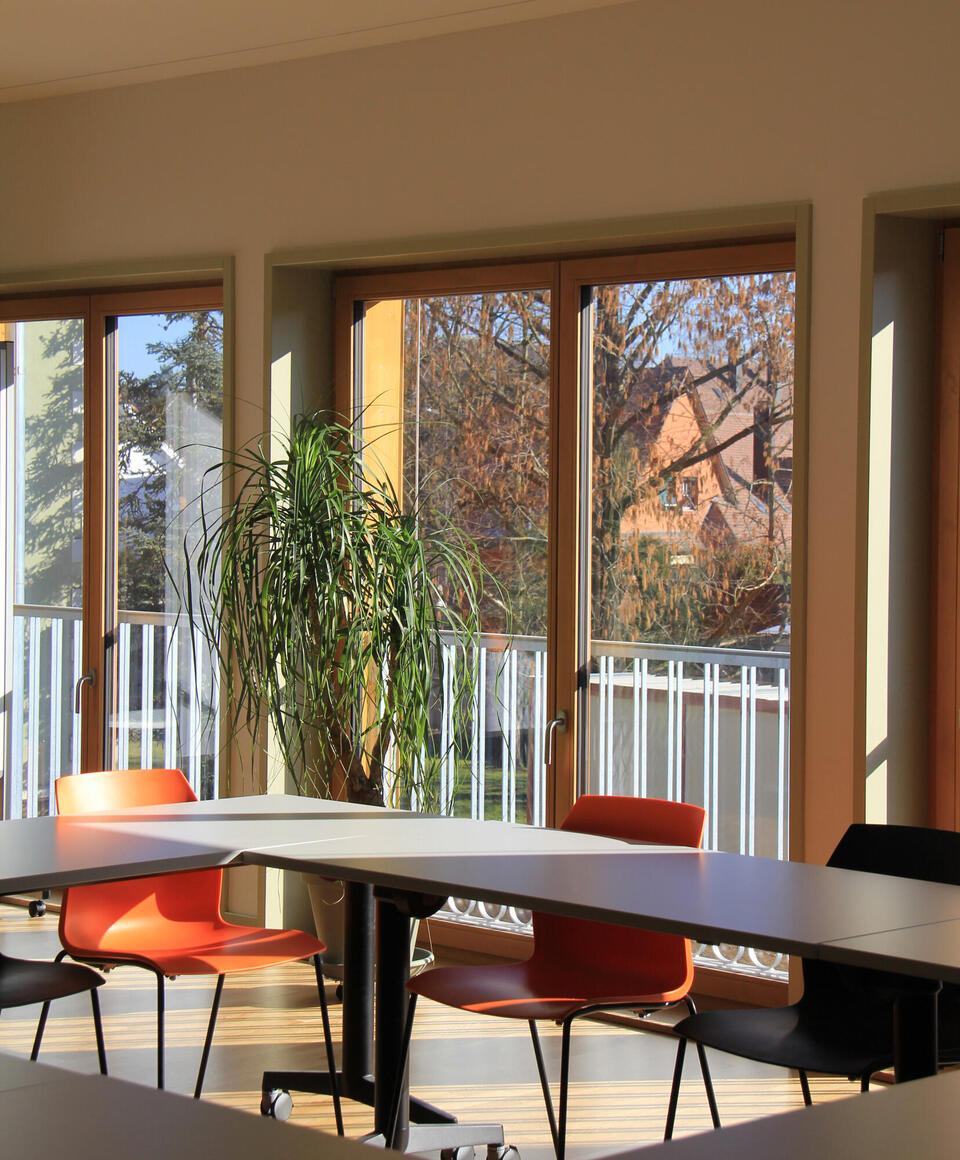 Workshop room